
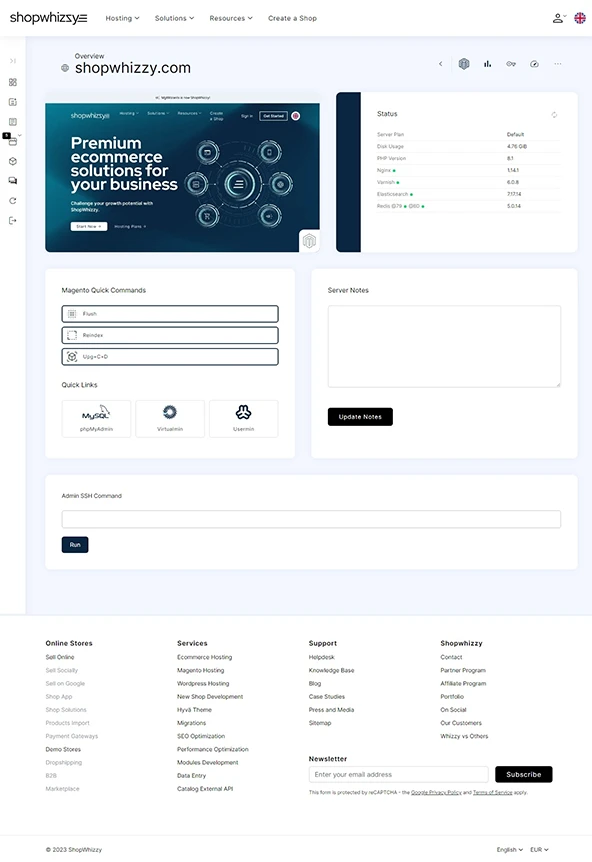
Na ShopWhizzy, sabemos a importância de uma solução de alojamento fiável e de alto desempenho para o seu site.
Seja uma pequena empresa, uma loja de e-commerce ou uma empresa em crescimento, temos o pacote de alojamento ideal para as suas necessidades.
Soluções de alojamento premium para o seu projeto

E-commerce Magento
totalmente gerido
Alojamento melhorado para o máximo desempenho. Otimizado para lojas com muito tráfego. Inclui Elasticsearch.

E-commerce Wordpress
totalmente gerido
Alojamento acessível e de alto desempenho para o CMS mais completo.

E-commerce Woo
totalmente gerido
Soluções de alojamento flexíveis para e-commerce, criadas para sites baseados em WordPress.
Sinta a diferença com a ShopWhizzy!
Eleve a sua presença online com um parceiro de alojamento sempre do seu lado.
Segurança de excelência, velocidade ultrarrápida e suporte simpático 24/7.


E-commerce Shopware
totalmente gerido
Desempenho, agilidade e segurança de topo para impulsionar um software de comércio eletrónico poderoso.

E-commerce Prestashop
totalmente gerido
Infraestrutura desenvolvida à medida para o máximo desempenho. Várias ferramentas de desenvolvimento disponíveis e suporte especializado em comércio eletrónico.
Alojamento
multiusos
Adequado para produção ou desenvolvimento. Muito robusto e fácil de gerir.
Porquê escolher os nossos serviços de alojamento?
Escolher os nossos serviços de alojamento traz inúmeras vantagens que nos distinguem da concorrência. Eis porque nos deve considerar como o seu parceiro de alojamento:
Desempenho ultrarrápido
Orgulhamo-nos da nossa infraestrutura de última geração, que garante velocidades de carregamento extremamente rápidas e um tempo de inatividade mínimo. Os seus visitantes terão uma experiência de navegação fluida, o que se traduz num maior envolvimento e satisfação dos clientes.
Escalabilidade e flexibilidade
Sabemos que o seu negócio pode evoluir e crescer ao longo do tempo. É por isso que oferecemos planos de alojamento escaláveis que crescem com o seu site. Comece com pouco e faça upgrade à medida que o tráfego e os requisitos aumentam, sem complicações.
Segurança robusta
A segurança dos seus dados e do seu site é a nossa principal prioridade. Os nossos serviços de alojamento incluem medidas de segurança avançadas que protegem contra ciberameaças e ataques maliciosos. Fique descansado: o seu site e os dados dos seus clientes estão seguros connosco.
Suporte especializado
Com a nossa experiência em Hyvä, ajudamos a sua loja online a destacar-se da concorrência. Ao integrar o Hyvä de forma transparente na plataforma Magento, garantimos que o seu website funciona na perfeição, proporcionando uma experiência de utilizador excecional que gera taxas de conversão mais elevadas.
Painel de controlo fácil de utilizar
Gerir a sua conta de alojamento deve ser simples. Com o nosso painel de controlo intuitivo, tem controlo total sobre o seu site, domínios, contas de e-mail e muito mais. Facilitamos-lhe a tarefa de se concentrar no seu negócio enquanto tratamos dos aspetos técnicos.
Relação qualidade-preço
Oferecemos preços competitivos sem comprometer a qualidade. Os nossos planos de alojamento oferecem uma excelente relação qualidade-preço, combinando funcionalidades, desempenho e suporte de excelência a preços acessíveis. Acreditamos que um alojamento fiável deve estar ao alcance de empresas de todas as dimensões.
Satisfação do cliente
Temos um historial comprovado de satisfação dos clientes. Inúmeras empresas e particulares confiaram-nos as suas necessidades de alojamento e esforçamo-nos constantemente por superar as suas expectativas. Não acredite apenas na nossa palavra – leia as avaliações e os testemunhos dos nossos clientes para perceber porque nos escolhem.

ElasticSearch
O Elasticsearch é um motor de pesquisa e análise de dados em tempo real.
É construído sobre o Apache Lucene e foi concebido para lidar com grandes volumes de dados de forma distribuída, permitindo indexar, pesquisar e analisar os dados com eficiência. É uma tecnologia open source, altamente escalável e amplamente utilizada em várias aplicações.
+500
lojas confiam na ShopWhizzy
Leve a sua presença online a novos patamares com os nossos serviços de alojamento de excelência. Junte-se a milhares de clientes satisfeitos que confiam em nós para as suas necessidades de alojamento. Comece hoje e desbloqueie o verdadeiro potencial do seu site!
SHOPWHIZZY
Os seus especialistas em alojamento
Torne-se nosso parceiro hoje e sinta a diferença de serviços de alojamento fiáveis que impulsionam o seu sucesso online. O nosso compromisso com o desempenho, a segurança, o suporte e preços acessíveis faz de nós a escolha ideal para as suas necessidades de alojamento.
Registe-se agora ou contacte a nossa equipa de suporte para mais informações. Temos todo o gosto em tê-lo connosco!
Perguntas frequentes
-
O alojamento web é o serviço que disponibiliza espaço de armazenamento e acesso a sites na Internet. Quando cria um site, este é composto por vários ficheiros (HTML, CSS, imagens, etc.) que têm de ser armazenados num servidor. Um fornecedor de alojamento web atribui uma parte do espaço dos seus servidores para armazenar esses ficheiros e torna-os acessíveis aos utilizadores da Internet.
Em termos simples, o alojamento web é como alugar espaço na Internet para guardar e apresentar o seu site. Permite que o seu site esteja acessível a qualquer pessoa com ligação à Internet. Quando alguém introduz o nome de domínio do seu site no navegador, o dispositivo liga-se ao servidor onde o site está alojado, e os ficheiros do site são obtidos e apresentados no ecrã.
Os fornecedores de alojamento web oferecem diferentes tipos de planos, como alojamento partilhado, servidores privados virtuais (VPS), servidores dedicados e alojamento cloud. Cada tipo tem as suas próprias funcionalidades, recursos e preços, permitindo aos proprietários de sites escolher a solução de alojamento mais adequada às suas necessidades e ao seu orçamento.
O alojamento web inclui normalmente também serviços adicionais, como alojamento de email, registo de nomes de domínio, gestão de bases de dados e medidas de segurança do site. Estes serviços variam consoante o fornecedor de alojamento e o plano escolhido.
Em resumo, o alojamento web é o serviço que permite a particulares e empresas tornar os seus sites acessíveis na Internet, armazenando e servindo os ficheiros do site em servidores disponibilizados por empresas de alojamento.
-
There are several types of hosting available, each offering different features and resources. Here are the most common types of hosting:
- Shared Hosting: Shared hosting is a popular and cost-effective option. With shared hosting, multiple websites are hosted on a single server and share its resources, such as CPU, RAM, and storage. It is suitable for small to medium-sized websites with moderate traffic. However, since resources are shared, heavy traffic or resource intensive websites can affect overall performance.
- Virtual Private Server (VPS) Hosting: VPS hosting provides a virtualized environment within a physical server. It offers more control and dedicated resources compared to shared hosting. Each website is allocated a specific amount of server resources, ensuring better performance and stability. VPS hosting is scalable, allowing you to upgrade resources as your website grows.
- Dedicated Server Hosting: With dedicated hosting, you have an entire physical server dedicated exclusively to your website. This offers the highest level of performance, security, and control. You have full access to server resources, allowing for optimal customization and flexibility. Dedicated hosting is recommended for high-traffic websites, large businesses, or those with specific hosting requirements.
- Cloud Hosting: Cloud hosting utilizes a network of interconnected servers to distribute resources and provide scalability. It offers high availability, as websites can use resources from multiple servers. Cloud hosting is known for its flexibility and pay-as you-go pricing model, allowing you to scale resources as needed. It is suitable for websites with fluctuating traffic and demanding resource needs.
- WordPress Hosting: WordPress hosting is specifically optimized for hosting websites built on the WordPress content management system. It includes pre-configured settings and features to enhance WordPress performance and security. WordPress hosting can be available in shared, VPS, or dedicated server environments, tailored for WordPress-specific requirements.
- E-commerce Hosting: E-commerce hosting is designed to meet the specific needs of online stores. It includes features like secure payment processing, SSL certificates, shopping cart integration, and database management. E-commerce hosting can be available in shared, VPS, or dedicated server environments.
It's important to assess your website's requirements, traffic levels, and budget when choosing a hosting type. Consider factors like performance, scalability, security, and support to select the hosting option that best suits your needs.
-
The cost of hosting can vary depending on the type of hosting and the hosting provider you choose.
Shared hosting is usually the most affordable option. Dedicated hosting provides exclusive use of an entire server. It offers the highest level of performance and customization but comes at a higher cost.
Cloud hosting often follows a pay-as-you-go pricing model, where you pay for the resources you use. Costs can vary based on the amount of storage, bandwidth, computing power, and additional services you require.
Remember to assess your website's requirements, including expected traffic, storage needs, and any additional services you may require, to determine the most suitable hosting plan for your budget.
-
Choosing the right hosting provider is crucial for the success of your website. Here are some factors to consider when selecting a hosting provider:
- Reliability and Uptime: Look for a hosting provider with a reputation for high reliability and uptime. Ensure they have robust infrastructure, redundant systems, and measures in place to minimize downtime. Look for guarantees of 99.9% uptime or higher.
- Performance and Speed: Opt for a hosting provider that offers fast server response times and high-speed connectivity. A slow-loading website can negatively impact user experience and search engine rankings. Consider providers with solid-state drives (SSDs) and content delivery network (CDN) integration for faster performance.
- Scalability and Flexibility: Assess your website's growth potential and choose a hosting provider that can accommodate your needs. Look for options to easily upgrade your hosting plan or scale resources as your website and traffic grow. A flexible provider will allow you to adjust hosting resources without significant downtime or disruptions.
- Customer Support: Check the quality and availability of customer support. Look for providers that offer 24/7 support through multiple channels such as live chat, phone, or email. Responsive and knowledgeable support can help address technical issues or concerns promptly.
- Security Measures: Website security is essential to protect your data and visitors' information. Ensure the hosting provider implements robust security measures such as firewalls, malware scanning, SSL certificates, and regular backups. Ask about their data backup policies and disaster recovery plans.
- Pricing and Value: Consider the pricing structure and the value provided by the hosting plans. Compare prices, features, and resources offered by different providers. Be cautious of extremely cheap hosting offers, as they may lack necessary features or have hidden costs. Look for a balance between affordability and the features you require.
- User-Friendly Control Panel: A user-friendly control panel, such as cPanel or Plesk, simplifies website management. Ensure the hosting provider offers an intuitive interface to manage your hosting account, domains, emails, databases, and other settings without technical expertise.
- Reputation and Reviews: Research the hosting provider's reputation and read customer reviews and testimonials. Look for feedback on their reliability, performance, support, and overall customer satisfaction. Independent review platforms and online communities can provide valuable insights.
- Additional Features and Services: Consider any additional features or services offered by the hosting provider. These may include automated backups, website builders, one-click installations, e-commerce tools, staging environments, or specialized support for specific platforms.
By considering these factors, you can make an informed decision when choosing a hosting provider that aligns with your website's needs, growth plans, and budget.
-
Shared Hosting: Shared hosting is a type of hosting where multiple websites are hosted on a single server and share its resources. This means that the server's CPU, RAM, storage, and bandwidth are divided among the websites hosted on it. Shared hosting is cost-effective and suitable for small to medium-sized websites with moderate traffic. However, since resources are shared, performance can be affected if other websites on the same server experience high traffic or resource usage.
VPS Hosting: VPS hosting stands for Virtual Private Server hosting. It provides a virtualized environment within a physical server, where each website is allocated its own dedicated resources. While multiple websites are still hosted on the same physical server, their resources are isolated and guaranteed. This offers better performance, stability, and control compared to shared hosting. With VPS hosting, you have root access to your virtual server and can customize it according to your needs. It is suitable for websites with medium to high traffic or specific requirements that require more control and resources.
Dedicated Hosting: Dedicated hosting provides exclusive use of an entire physical server for a single website. With dedicated hosting, you have full control over the server's resources, including CPU, RAM, storage, and bandwidth. This offers the highest level of performance, security, and customization. Dedicated hosting is suitable for large businesses, high-traffic websites, or those with specific hosting requirements. It provides the ability to handle heavy traffic, resource-intensive applications, and high-security needs.
In summary, shared hosting is a cost-effective option where resources are shared among multiple websites. VPS hosting offers dedicated resources within a virtualized environment, providing better performance and control. Dedicated hosting provides exclusive use of an entire physical server, offering the highest level of performance, security, and customization. The choice between these hosting types depends on factors such as website traffic, resource requirements, budget, and the level of control you need.
-
Yes, it is often possible to host multiple websites on a single hosting account, depending on the hosting provider and the type of hosting plan you have.
It's important to check the hosting provider's terms and the specific features of your hosting plan to determine the exact number of websites you can host. Additionally, consider the resources (such as storage, bandwidth, and processing power) required by each website to ensure that the hosting plan can accommodate them effectively.
Keep in mind that hosting multiple websites on a single account means they will share the available resources, so it's important to monitor and manage resource usage to ensure optimal performance for all hosted websites.
-
Yes, it is possible to transfer your website from one hosting provider to another. Website transfers involve migrating your website's files, databases, configurations, and other necessary components from your current hosting provider to the new one. Here's an overview of the website transfer process:
- Choose a New Hosting Provider: Research and select a new hosting provider that meets your requirements in terms of features, performance, support, and pricing.
- Set Up Your New Hosting Account: Sign up for a hosting account with the new provider. They will provide you with the necessary account details, including nameservers or IP addresses.
- Back up Your Website Files and Databases: Before initiating the transfer, it is crucial to back up your website files, databases, and any other necessary data. This ensures that you have a copy of your website in case anything goes wrong during the transfer process.
- Transfer Your Website Files: There are several methods to transfer your website files, including using FTP (File Transfer Protocol), SSH (Secure Shell), or utilizing a website migration tool provided by the new hosting provider. You will need to upload your website files to the appropriate directories on the new hosting server.
- Migrate Databases: If your website relies on a database (e.g., MySQL), you will need to export the database from your current hosting provider and import it into the database server of the new hosting provider. This ensures that your website's data is transferred successfully.
- Update DNS Settings: After migrating your website, update the DNS (Domain Name System) settings of your domain to point to the nameservers or IP addresses provided by the new hosting provider. This step ensures that visitors reach your website on the new hosting server.
- Test and Verify: Once the DNS changes propagate, access your website on the new hosting server to ensure everything is working correctly. Test various functionalities, links, and contact forms to verify that the transfer was successful.
- Cancel Old Hosting Account: After confirming that your website is functioning correctly on the new hosting provider, you can cancel your old hosting account with the previous provider. Be sure to follow their cancellation procedures and ensure that all necessary backups and data are retrieved from the old hosting account.
Note that the website transfer process can vary depending on the hosting providers involved, the complexity of your website, and the technical skills required. If you are uncertain or uncomfortable performing the transfer yourself, many hosting providers offer website migration services or provide support to guide you through the process.
-
Yes, as hosting providers we offer the flexibility to upgrade your hosting plan as your website grows and requires more resources. Upgrading your hosting plan allows you to accommodate increased traffic, storage needs, and other requirements.
It's worth noting that the upgrade process may involve changes in pricing, billing cycles, and contract terms, so be sure to review the details with your hosting provider. Additionally, upgrading your hosting plan may come with additional costs, depending on the upgraded resources and the provider's pricing structure.
Regularly assessing your website's needs and upgrading your hosting plan accordingly ensures that your website has the necessary resources to handle increasing traffic and provides a positive user experience.
-
Yes, SSL (Secure Sockets Layer) is included with our hosting plans.
We prioritize the security of our customers' websites and offer SSL certificates to enable secure data transmission.
With SSL encryption, you can ensure that sensitive information shared between your website and its visitors is protected.
This includes login credentials, personal data, and payment details, enhancing the security and privacy of your users.
We provide free SSL certificates through trusted services like Let's Encrypt or offer access to commercial SSL certificates.
Our hosting plans make it easy to set up and maintain SSL for your website, ensuring a safe browsing experience for your visitors.
Não consegui responder a essa pergunta. Deixe o seu e-mail e um colega dará seguimento.